High-end safety for high-end retail. JRA Safety’s fire strategy for Larry King Marylebone ensures luxury and compliance coexist.
Conduit Street, Mayfair
Conduit Street, Mayfair
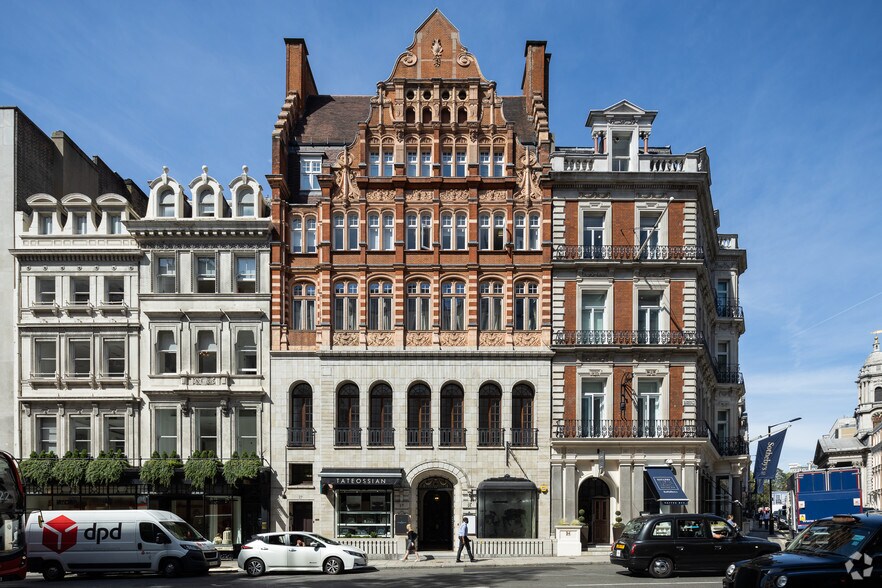
JRA Fire Safety Advisors were appointed by Buckingham Management to undertake an intrusive fire resistance survey and prepare a detailed fire engineering technical note for the existing masonry walls at 26–27 Conduit Street, Marylebone, London. The commission was undertaken to support the architect and wider design team in developing a compliant fit-out and refurbishment strategy for the mixed-use building, ensuring the existing structure could satisfy the fire compartmentation requirements of the proposed development.
The building, a historic mixed-use property dating from the 1800s, comprises residential accommodation above commercial occupancies, including retail and auction house premises. JRA’s appointment involved inspecting intrusive survey openings formed within the existing masonry walls throughout the building to assess their construction, thickness, and likely fire resistance performance against the requirements of BS EN 1996-1-2:2005 (Eurocode 6 – Design of Masonry Structures).
The technical assessment considered a range of wall types including party walls, lift shaft enclosures, protected stair walls, external courtyard walls, and separation walls between commercial and residential occupancies. Each wall construction was reviewed against the required fire compartmentation standards identified by the project fire engineer, with detailed analysis undertaken to determine whether the existing masonry construction could achieve the necessary 30-, 60-, 90-, or 120-minute fire resistance ratings.
Through intrusive investigation and technical benchmarking, JRA concluded that the majority of the existing double-leaf masonry walls provided a minimum of 60 minutes fire resistance, making them suitable for many of the proposed compartmentation requirements. However, areas of single-leaf masonry and hollow clay pot construction were identified where additional fire protection measures would be required to achieve compliance, particularly where enhanced 90- or 120-minute fire resistance standards were specified. Recommendations were provided for supplementary fire protection systems, including additional lining and fire-resisting build-up solutions, to enable the existing structure to meet the required performance standards.
This project demonstrates JRA Fire Safety Advisors’ expertise in assessing historic and existing building fabric to determine inherent fire performance, supporting refurbishment and fit-out projects through practical, evidence-based fire engineering advice. The technical note provided the design team with clear and defensible guidance on the suitability of retained construction, helping to inform specification decisions, reduce unnecessary demolition, and support Building Control approval.
Our Professional Services

Fire Engineering

Fire Strategies

Fire Statement

Fire Risk Assessments

DSEAR Assessments

Fire Compartmentation Surveys

Fire Door Surveys

Ad Hoc Support
The Voice of Our Clients

JRA Fire Safety Advisors have provided professional and reliable consultancy support on fire safety to Summerhill Services Limited for the facilities of Birmingham and Solihull Mental Health NHS Foundation Trust. Their team has assisted the Estates and Capital teams by conducting fire compartmentation surveys and fire door inspections. They demonstrated strong technical knowledge of fire safety requirements in healthcare and showed an understanding of the sensitivities involved in working within active clinical environments. Their approach was well-structured, thoroughly documented, and supportive of informed decision-making in a regulated healthcare setting. They engaged collaboratively and responsively, maintaining clear communication and employing well-organised methodologies that facilitated effective coordination with internal stakeholders. The survey outputs were comprehensive, clearly documented, and presented in a manner that enabled informed decision-making, prioritisation, and planning within a highly regulated healthcare context
West Bromwich Albion football club takes the health, safety and wellbeing of all its staff, supporters and visitors very seriously, and there is a huge responsibility upon us to ensure that fire and safety are amongst the most important considerations. We have utilised the services of JRA now for our fire risk assessments over several years and have always been impressed with the diligence and pragmatism they have adopted when undertaking their work. The knowledge of the stadium and other WBA FC venues that JRA has built up and the associated advice that JRA has been able to give the club has ensured that we have consistently improved our fire protection as control measures and potential solutions to fire hazards evolve. We look forward to partnering with JRA and continuing to learn and share best practices.

JRA have been conducting our Fire Risk Assessments as a preferred supplier for a while now due to the comprehensive, thorough nature of the reports as much for their understanding of our business and the professional manner in which they conduct themselves.

I am very grateful to Alex and the team at JRA for delivering for us in fire risk assessing our unique heritage property on completion of a £28 million restoration. Alex showed flexibility in adapting his approach to meet the phased opening of the buildings and went above and beyond the call, putting in many hours to meet the deadline that allowed us to open to visitors and tenants on time. The quality of the assessment was excellent, and Alex showed a real eye for detail and a good understanding of a large and complex set of inter-connected properties with different uses and levels of finish. Thank you, Alex and everyone at JRA, for your support.

We have used JRA for our annual fire risk assessments in both schools on our campus for over five years now, and we are delighted with the level of service provided. Both sites have very different needs, and they have accommodated these perfectly; the risk assessments are down to earth, thorough and easy to understand, and the attached plan helps to arrange remedial works. Their knowledge of relevant legislation is extensive and up to date, and they are always happy to answer our many queries outside of the risk assessment at no extra cost. I would heartily recommend them to anyone looking to improve the safety of their site."
We at Marcegaglia UK were extremely impressed with the fire risk assessment carried out across our sites. The assessor was thorough, knowledgeable, and explained everything clearly while maintaining a friendly yet professional relationship, ensuring we fully understood both the risks and the recommended actions. The report was very detailed, easy to follow, and tailored specifically to our premises. We now have complete confidence that our fire safety arrangements are compliant and effective. The highly professional service that JRA provide always meets the standard and we would confidently recommend

The Hadley Group has collaborated with JRA for many years prior to my appointment. Since joining, I have enhanced my contractor pool by bringing in new suppliers to support my vision, while continuing to work with JRA . Having partnered with several fire risk experts for the British Transport Police and Salisbury FM, I can confidently say that collaborating with JRA has been seamless and highly professional. What sets JRA apart is their genuine commitment to understanding the unique complexities of our manufacturing environments. Their technical expertise in conducting Fire Risk Assessments is exceptional, but the confidence we have in their capabilities is what truly adds value to our operations. Beyond the formal assessments, JRA are always available to provide expert support and practical advice whenever challenges arise. Knowing that their team are on hand to offer guidance at any stage gives me complete confidence in our site safety and regulatory compliance. I highly recommend their consultancy for any industrial application where technical expertise and reliable ongoing support are priorities. Their professional approach and technical insight have been instrumental in enhancing my current pool of properties under my remit
We have used JRA for completing Fire Risk Assessments at our DC’s since 2024 and it has been a pleasure working with them. They are always very helpful and approachable as well as very knowledgeable in this area. The reports produced are very comprehensive and clearly laid out so it’s easy for us to understand what issues there are and what needs to done to address these. JRA have also been helpful in assisting with finding specialists to complete certain works that have been identified as an issue within the Fire Risk Assessment which shows their willingness to assist even after they have completed their parts. A great company to work with and long may this continue.

RBSL have been using JRA for several years to carry out annual fire risk assessments and to provide advice and guidance due to modifications within the factory. The service we have received has always been professional, and they will always go out of their way to support business requirements. The visits we receive are comprehensive, and all recommendations are explained thoroughly at the time of the assessment and in the reports. We also regularly contact Alex by email and always receive a quick response with guidance that is made simple. Thank you to Alex and the team for the support we have received, and we would highly recommend JR Associates to other businesses who need expert advice.
I have had the pleasure of dealing with JRA for many years; they look after multiple sites within our group. Alex and his team significantly focus on giving fully in-depth, current, assessments with a personal approach. The team's knowledge and comprehensive Fire risk assessments have also been commended by our local fire service, with whom we work closely to monitor our sites. If, as a company, small or large, the safety of your employees and buildings means something to you, this is the team to speak to.

We have worked with JRA on two specific projects. One being a complex refurbishment of a boarding house and the other was regarding guidance on cladding on a number of our buildings. Throughout the process JRA have provided clear detailed information, responding to complex queries from Building Control. All information was provided in a quick timely manner and assisted in the successful completion of the project. I would happily work with JRA again

We have benefited greatly from JRA supporting us with our Fire Risk Assessments, using their expertise and knowledge to guide us through the report and make the relevant recommendations we needed.

I’ve worked with JRA for years across multiple sites, and they always provide clear, reliable advice, even outside of scheduled work. Their risk assessments are thorough, easy to understand, and fully tailored to each site.
We have developed a great working partnership with JRA, whom we have worked with for many years. They accommodate and understand the needs of our organisation and provide excellent advice, guidance and feedback on all aspects of fire safety. Friendly and understanding of our clients who live at our properties and always take time to speak to them.
At Scriven & Co, we manage hundreds of properties, from flats to houses and other types of residential accommodation, plus various types of commercial premises. The safety of tenants, and doing things correctly is paramount to us, and this is why we use JRA. Over the years, we have used a variety of fire safety advisors, however it is always JRA that we now turn to now. Whether we need a fire risk assessment, fire stopping survey, or simply need to pick up the phone to seek advice, JRA are always on hand, to offer professional and friendly advice. On many occasions, JRA have come up with cost effective solutions for our clients, not only saving them money, but more importantly, reducing their risk and liability. We simply would not go anywhere else.

We are a serviced officer provider who have been working with JRA Fire Safety for the last 5 years. They have worked in all our buildings, providing comprehensive Fire Risk Assessment and Fire Strategy reports. Alex and his team are extremely professional and all the surveys have been carried out respectfully, with minimum disruption to the occupants. The reports have all been received in a timely manner and have offered excellent value for money when compared to other fire Safety Consultancies. We have recommended their services to other companies and I would 100% recommend JRA Safety to another serviced office provider.

We have used JRA for over ten years and have found them to provide a very professional and reliable service. They are always there at the end of the phone to answer any questions or queries we have.

I have been using JRA Fire Safety for over a year and could not be happier with their services. JRA is attentive, always prepared, and ahead of me when booking my Fire Risk Assessment renewals. They have been so knowledgeable, especially with a recent cladding remediation project I have ongoing, where they have explained processes to me and been there to answer my calls when authorities have made it difficult for me. JRA always goes above and beyond what is expected, and I wouldn’t use anyone else to carry out my assessments. Thank you, JRA, for being with me every step of the way on my block management journey!

I had the pleasure of working with Alex as my fire safety advisor for both my residential flats and commercial premises, and I couldn’t be more grateful for his help. JRA went above and beyond in every aspect of his work, providing thorough, practical advice while ensuring that I always felt comfortable asking any questions, no matter how small. He was especially invaluable when we faced some difficult challenges with building control, which was incredibly stressful. Alex’s expertise and calm approach made navigating those hurdles so much easier. His dedication and professionalism were truly amazing, and I would highly recommend him to anyone needing fire safety guidance.